Photo ©2009 Universe 6


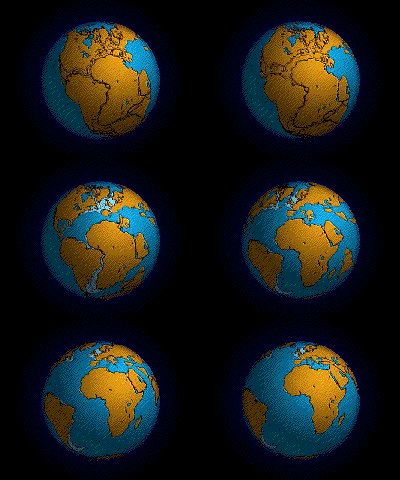
About 200 MYA New York's Manhattan Island and the now tree-hidden Palisades on the New Jersey shore of the Hudson River were opposite the Cap Bojador-Cap Blanc regions of West Africa... Between 220 and 200 MYA innumerable rift valleys had formed from eastern Greenland to Guinea in West Africa at the start of the breakup of Pangea. Along what is now the East Coast of North America, the "Newark Rift system" stretched from the Carolinas to Nova Scotia. When the supercontinent finally rifted apart between the East Coast and Northwest Africa, it separated along the approximate line of a previous suture. Water flooded into the breach from the Tethys Ocean in the east to form the proto-Central Atlantic, from Gibraltar to the Bahamas. As seafloor spreading took hold, the tension pulling the neighboring margins apart eased, and the now-inactive rift valleys were filled by lakes and sediments. During the active lifetime of the East Coast rifts basalt flooded parts of what are now the states of Connecticut and New Jersey. Some magma that could not reach the surface intruded beneath existing rocks to form volcanic "sills" - so named because of their elongated, horizontal windowsill form. One such sill has since been uplifted and uncovered by erosion to form a high escarpment, the Palisades cliffs of the Hudson River - a memorial to the origins of Pangea's disintegration.